Video surveillance and access control are often treated as separate security systems. Cameras show what happened. Access control determines who can enter. Visitor management tracks guests, vendors, contractors, or service providers. Each system has value on its own, but the real operational benefit comes when these tools work together.
For Security Directors, Facilities Directors, IT Directors, Operations Executives, Property Managers, and compliance leaders, the goal is not simply to add more cameras or install more card readers. The goal is to create a physical security environment that improves visibility, supports faster response, strengthens accountability, and aligns with how the facility actually operates.
This matters across healthcare, education, commercial real estate, manufacturing, energy, logistics, financial services, construction, corporate campuses, and multi-site organizations. These environments often manage employees, visitors, vendors, tenants, students, patients, contractors, and field teams across different buildings or access points. When security systems are disconnected, teams may have information, but not enough context to act quickly.
An integrated approach helps close that gap. It connects access activity, video footage, visitor records, monitoring workflows, and response procedures into a more coordinated security operation.
Many facility security issues are not caused by a complete lack of technology. They are caused by disconnected tools, unclear ownership, inconsistent processes, or limited visibility across systems.
A building may have cameras, but security teams may need to manually search footage after an incident. A facility may have access control, but teams may not quickly connect a door event to video confirmation. A visitor system may capture check-ins, but it may not align with access permissions or emergency procedures. A multi-site organization may have different security practices across locations, making support, reporting, and investigation harder than needed.
These are operational problems, not just technical problems.
When systems are disconnected, response becomes slower. Teams spend time gathering information from different platforms. Investigations depend on manual searches. Security leaders may not know whether policies are being followed consistently. Facilities teams may struggle to understand building activity. IT may be asked to support devices that were not planned as part of the network or cybersecurity environment.
The business impact can include delayed response, inconsistent access management, weaker incident documentation, lower confidence in facility protection, and more pressure on security and operations teams.
Video surveillance is valuable because it provides visibility. Cameras can help teams review incidents, monitor critical areas, support investigations, and understand activity across a facility. But cameras alone do not answer every security question.
A camera may show that someone entered a building, but it may not explain whether that person was authorized. It may capture activity at a door, but not connect that event to a badge, mobile credential, visitor record, or access exception. It may record footage, but if no one can quickly find the right clip, the value is reduced during time-sensitive situations.
This is why video surveillance should be part of a broader physical security strategy. The value increases when cameras are tied to access events, visitor activity, alerts, and response workflows. Instead of manually searching through hours of footage, teams can review video associated with a specific door event, access attempt, alarm, or visitor check-in.
The goal is not to watch everything all the time. The goal is to make important events easier to understand, verify, and respond to.
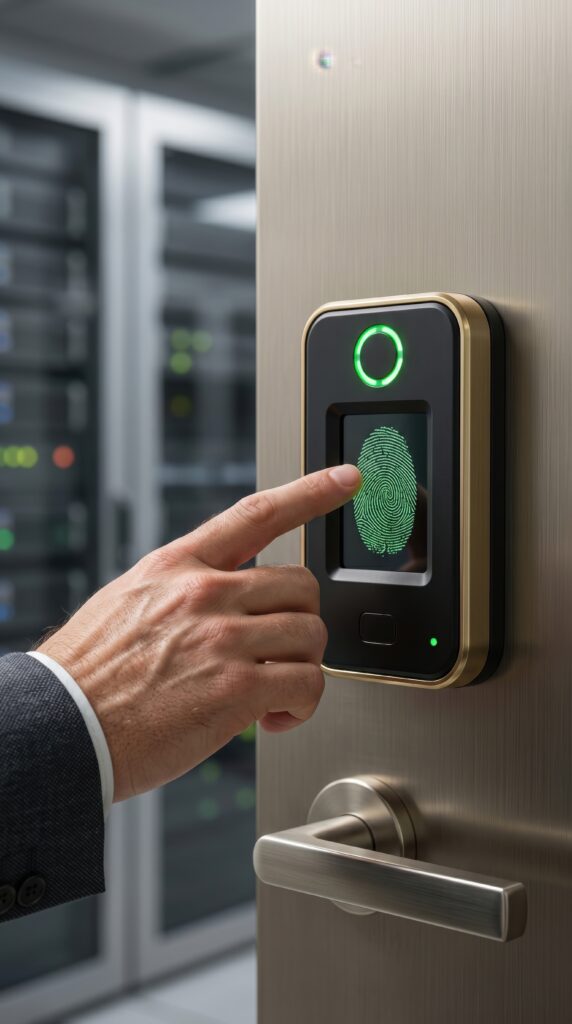
Access control helps organizations manage who can enter specific areas, when they can enter, and under what conditions. It is a key part of protecting employees, visitors, assets, equipment, data centers, labs, warehouses, classrooms, clinics, offices, and restricted operational areas.
However, access control is most effective when it is managed as a business process, not just a door system. Leaders need to know how credentials are issued, how access levels are approved, how role changes are handled, how former employees or contractors are removed, and how exceptions are reviewed.
Common gaps include overly broad permissions, shared credentials, delayed removal of access, inconsistent access rules across locations, and limited review of door activity. These issues can create risk even when the technology itself is working.
When access control is integrated with video surveillance, the organization gains better context. A denied access attempt can be reviewed with video. A forced door event can be verified visually. An after-hours entry can be tied to the person, location, time, and recorded activity. This gives security and operations teams a clearer picture of what happened.
Visitor management is often overlooked in physical security planning, but it plays an important role in facility awareness. Employees and badged users are only part of the building population. Many facilities also support visitors, vendors, delivery drivers, contractors, service providers, tenants, patients, students, job candidates, and public guests.
A visitor management process helps teams understand who is expected, who checked in, who they are meeting, and whether they should have access to certain areas. When connected to access control and video surveillance, visitor management can provide a more complete view of building activity.
For example, a visitor check-in can be tied to a host notification, temporary credential, access permissions, and camera coverage at entry points. If an incident occurs, teams can review who was onsite, where access was granted, and what video is associated with the event.
This is especially important for public-facing facilities, healthcare environments, education campuses, commercial real estate, corporate campuses, and multi-tenant buildings. In these spaces, security teams need to balance access, safety, experience, privacy, and operational flow.
Visitor management should not create unnecessary friction. It should make the check-in process clearer, more accountable, and easier to support.
The biggest operational benefit of integrating video surveillance and access control is speed of context. When an event happens, teams should not have to jump between multiple systems to understand what occurred.
If a door is forced open, the system should help teams identify the door, time, access event, user, related video, and response path. If someone attempts to enter a restricted area, teams should be able to review the access attempt and associated footage. If a visitor checks in, the system should support host notification, access expectations, and activity review if needed.
This does not mean every organization needs a fully automated security operation. It means physical security systems should be designed to reduce manual effort and improve decision-making.
Better integration can support:
The value is not the integration itself. The value is what integration helps teams do faster and more accurately.
Monitoring is another area where integration matters. A camera system may generate alerts. An access control system may log events. A visitor platform may capture check-ins. But if those signals are not prioritized, routed, or reviewed properly, teams may become overwhelmed or miss important activity.
Security leaders should define which events matter most. Not every door event requires immediate attention. Not every camera alert needs escalation. Not every visitor check-in requires special handling. A mature monitoring strategy separates routine activity from events that require review, verification, or response.
For example, an after-hours access event at a main entrance may be normal for authorized staff. The same event at a restricted storage room may deserve review. A denied access attempt may be harmless if someone used the wrong door, but repeated attempts may signal a process issue or security concern.
Integrated systems can help teams apply context. The more context available, the better the response decision.
Modern physical security systems are connected technology systems. Cameras, access control panels, badge readers, visitor management platforms, video storage, cloud dashboards, mobile credentials, and monitoring tools often depend on network infrastructure, identity systems, cybersecurity controls, and device management.
This means IT should be involved early. Physical security planning should account for network capacity, segmentation, device lifecycle, remote access, permissions, storage, software updates, monitoring, and support ownership.
Without IT alignment, security systems can become difficult to manage. Cameras may strain the network. Devices may be installed without documentation. Access systems may not align with identity processes. Cloud-based platforms may create data governance questions. Support responsibilities may be unclear when something fails.
A strong physical security strategy brings security, facilities, IT, and operations together before technology decisions are made.
Physical security systems handle sensitive information. Video footage, access logs, visitor records, credentials, and user activity can all raise privacy, policy, and governance considerations.
Leaders should define who can view footage, who can export recordings, who can approve access, who can review visitor logs, and how long records should be retained. These decisions should reflect business needs, legal guidance, internal policies, and user expectations.
The goal is responsible management. Security tools should improve protection and accountability, but they should also be governed carefully. Overly broad access to video or logs can create its own risks. Poor retention policies can create confusion. Weak user management can reduce trust in the system.
Privacy and user management should not be treated as afterthoughts. They should be part of the initial assessment and operating model.
Organizations often begin exploring integrated physical security because their current environment has become difficult to manage.
A common sign is slow investigation. If teams spend too much time matching access logs to camera footage, the systems are not supporting response efficiently. Another sign is inconsistent access management. If permissions vary by site, credentials are not reviewed, or former users remain active, access control needs stronger governance.
Other symptoms include repeated door issues, unclear visitor processes, separate systems for each building, limited reporting, poor camera coverage at key access points, disconnected monitoring workflows, or uncertainty about who owns system support.
Multi-site organizations may also see inconsistent standards. One facility may have modern cameras and access control, while another uses older systems or manual processes. This makes training, response, reporting, and maintenance harder across the business.
The business impact is operational drag. Security and facilities teams spend more time piecing together information. IT gets pulled into urgent support issues. Leadership lacks confidence in visibility. Users experience inconsistent processes. Incidents take longer to review.
Before selecting cameras, access control systems, or visitor management tools, leaders should clarify the risks and workflows the organization needs to manage.
These questions help ensure technology decisions are based on real risks and workflows, not assumptions.
The best next step is a physical security assessment or integrated security consultation. This should begin with business risk, facility workflows, and operational needs—not a product list.
Video surveillance and access control work better together because they provide context. Cameras show what happened. Access control shows who attempted to enter, where, and when. Visitor management adds another layer of awareness for non-employees. Monitoring and integration help teams connect those signals into a more useful response process.
The strongest physical security strategies are not built around cameras alone. They are built around facility risks, user workflows, privacy expectations, response procedures, and cross-team coordination.
For organizations managing growth, multiple locations, public-facing facilities, regulated environments, or complex operations, integrated physical security can improve visibility, accountability, and response readiness without overcomplicating the first phase.
Request a physical security assessment or integrated security consultation to evaluate access control, video surveillance, visitor management, monitoring, and response workflows across your facility or multi-site environment. Start here.