Every year brings a new wave of AV “must-haves.”
Some are genuinely helpful.
Others look impressive but create long‑term headaches.
In 2026, the gap between useful AV innovation and unnecessary complexity is wider than ever. IT leaders are expected to modernize collaboration spaces while keeping systems stable, secure, and easy to support.
This article breaks down the AV trends that are shaping 2026—and, more importantly, which ones actually deliver value for real businesses.
AV used to be a facilities concern. Today, it sits squarely at the intersection of IT, operations, and employee experience.
Hybrid work made conference rooms business‑critical infrastructure. If collaboration tools fail, productivity drops immediately. Because of this, AV decisions now affect network design, security posture, and support workloads.
Most importantly, executives expect AV investments to last. Trend‑driven purchases that age poorly create frustration and rework. The smartest organizations are focusing on technologies that improve reliability and standardization, not novelty.
In 2026, the question is no longer “what’s new?” It’s “what actually works at scale?”
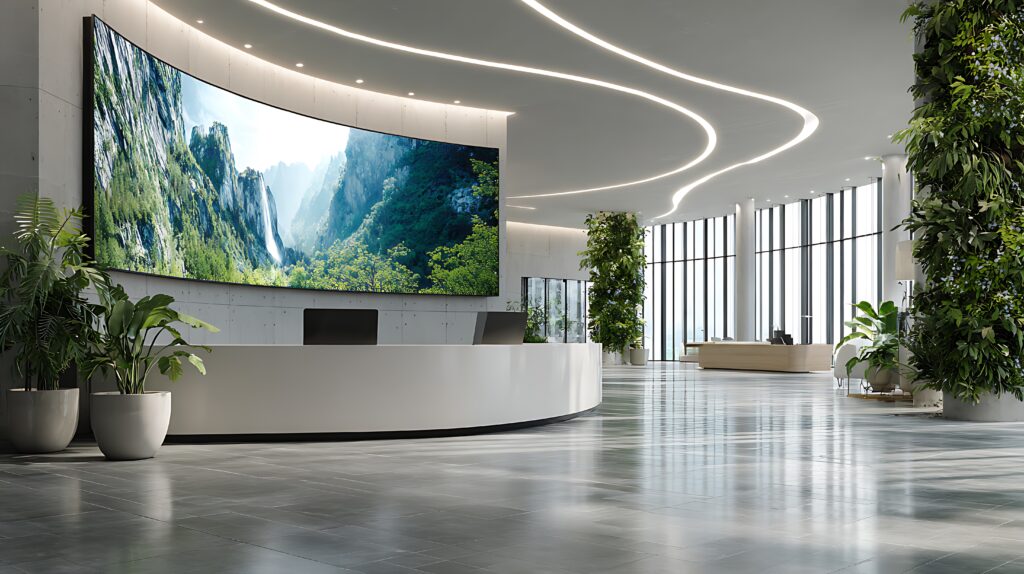
One of the most visible AV trends in 2026 is the shift from projection to direct view LED displays.
Direct view LED offers higher brightness, better contrast, and longer lifespan than traditional projectors. These displays perform well in rooms with ambient light and don’t require lamps or frequent recalibration. For executive boardrooms and high‑impact spaces, the experience difference is obvious.
However, LED is not automatically the right choice for every room. Smaller spaces, limited viewing distances, and budget constraints still make projection or large‑format displays practical options.
The takeaway is simple: LED is becoming the preferred solution where visual impact and longevity matter most. It should be evaluated intentionally, not adopted blindly.
For years, video dominated AV conversations. In 2026, audio quality is finally being recognized as the foundation of successful meetings.
Modern microphone arrays, advanced digital signal processing, and room‑specific tuning have changed what’s possible. These systems can balance voices, suppress background noise, and create a more natural conversation for remote participants.
Because remote attendees rely entirely on audio, even minor issues are amplified. Poor audio leads to disengagement faster than any video problem.
Organizations that prioritize audio design see immediate gains in meeting effectiveness. This trend matters because it directly impacts communication, not just aesthetics.
AV over IP is no longer emerging technology. In 2026, it is the default architecture for modern AV systems.
Video, audio, control, and monitoring now travel over the same network infrastructure as other enterprise systems. This enables scalability, centralized management, and easier expansion across buildings or campuses.
At the same time, this trend raises the bar for integrators. Poorly designed AV networks can cause congestion, latency, and security concerns.
Successful deployments require close coordination between AV and IT teams.
When done correctly, network‑based AV simplifies long‑term ownership. When done poorly, it creates ongoing support challenges. This is one of the most important trends for IT leaders to evaluate carefully.
In 2026, simplicity is the real innovation.
Organizations are standardizing on collaboration platforms like Microsoft Teams Rooms and Zoom Rooms to reduce user confusion. These systems prioritize one‑touch join, consistent room behavior, and predictable support models.
The goal is not more features. It is fewer failure points.
Rooms that work the same way every time reduce help desk tickets and improve adoption. Because of this, IT leaders are pushing for repeatable designs rather than one‑off “showcase” rooms.
This trend reflects a broader shift toward operational efficiency over visual flash.
AI is now embedded throughout modern AV systems. Camera framing, speaker tracking, noise suppression, and meeting insights are becoming standard capabilities.
The most successful AI features are the ones users don’t think about. They quietly improve the experience without requiring training or adjustment.
However, not all AI adds value. Features that complicate workflows or generate unreliable data often create more work than benefit.
In 2026, the smart approach is selective adoption. AI should enhance reliability and clarity, not distract from the meeting itself.
After years of rapid change, organizations are prioritizing consistency.
Standardized room types, shared hardware platforms, and common control interfaces make systems easier to support and scale. This trend is especially important for multi‑location businesses.
Custom designs still have a place, but only where the business case justifies it. For most rooms, predictable performance is more valuable than uniqueness.
Standardization also shortens onboarding time for employees and reduces long‑term maintenance risk. This shift reflects a maturing approach to AV ownership.
Not every trend deserves investment.
Over‑automated rooms with excessive sensors often fail more often than they succeed. Ultra‑complex control interfaces create user resistance. Experimental display formats can limit future flexibility.
Technology should serve the meeting, not the other way around. If a feature does not reduce friction or improve clarity, it likely does not belong in a production environment.
The most successful AV strategies in 2026 are conservative in the right ways. They adopt proven technologies and avoid unnecessary complexity.
Trends are only useful when evaluated through a business lens.
Start by asking how a technology affects reliability, support effort, and user experience. Consider how it integrates with your existing network and security model. Think about how it will be supported three to five years from now.
Seeing technology in action helps clarify these questions. Many differences are impossible to judge from spec sheets alone.
This is why hands‑on evaluation remains one of the most effective decision tools available.
Reading about AV trends is useful. Experiencing them is better.
Seeing direct view LED in a real room reveals how brightness and clarity affect engagement. Hearing a properly tuned audio system demonstrates the difference immediately.
Using a standardized collaboration room shows how simplicity changes behavior.
For high‑impact decisions, firsthand experience reduces risk. It turns abstract trends into concrete understanding.
This is especially valuable for IT leaders responsible for long‑term performance, not just initial installation.
AV trends in 2026 are less about flash and more about function.
The technologies that matter most improve clarity, reliability, and scalability. They support hybrid work without adding complexity. They respect the realities of IT operations and long‑term ownership.
The best AV strategies don’t chase every trend. They choose the ones that align with how people actually work.
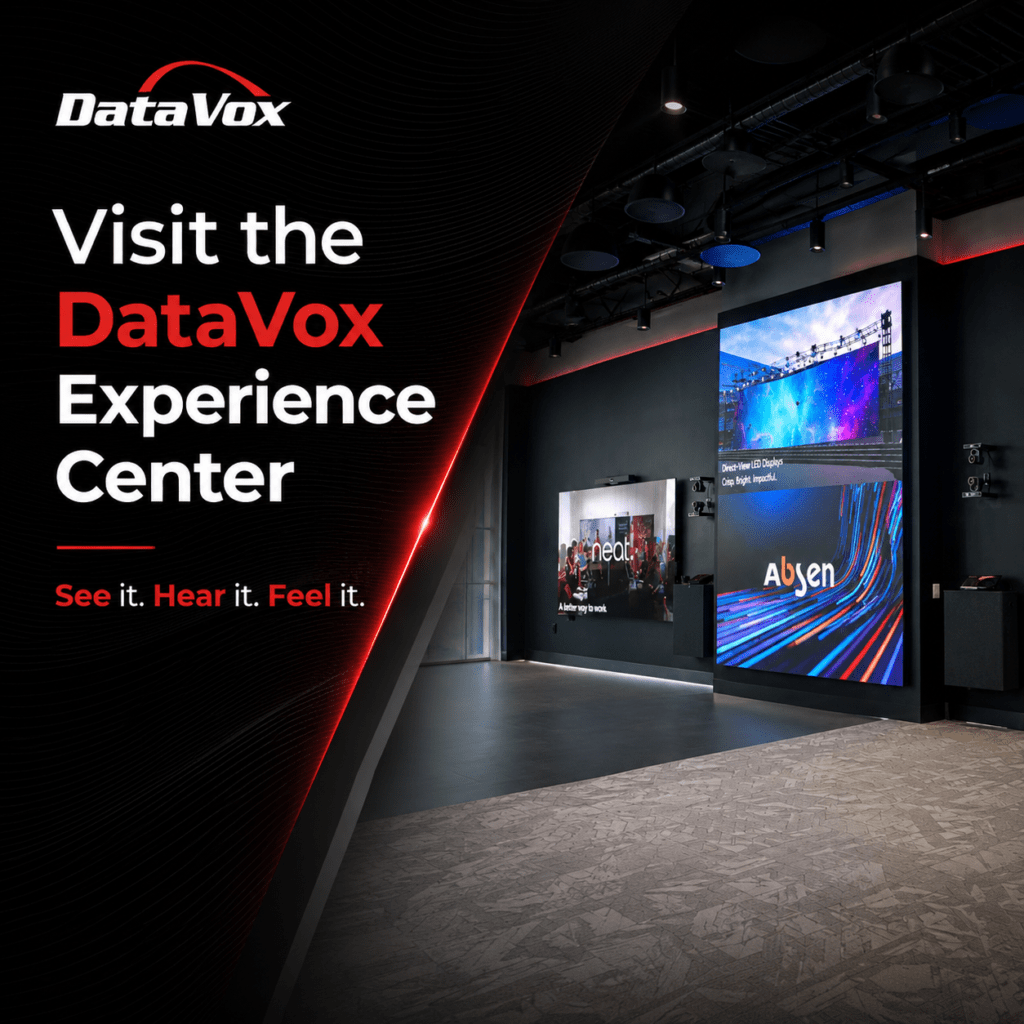
See these AV technologies in action by visiting the DataVox Experience Center and exploring what works best for your spaces.